
Launch Your Tech Career: The Ultimate Guide to a Software Testing Course
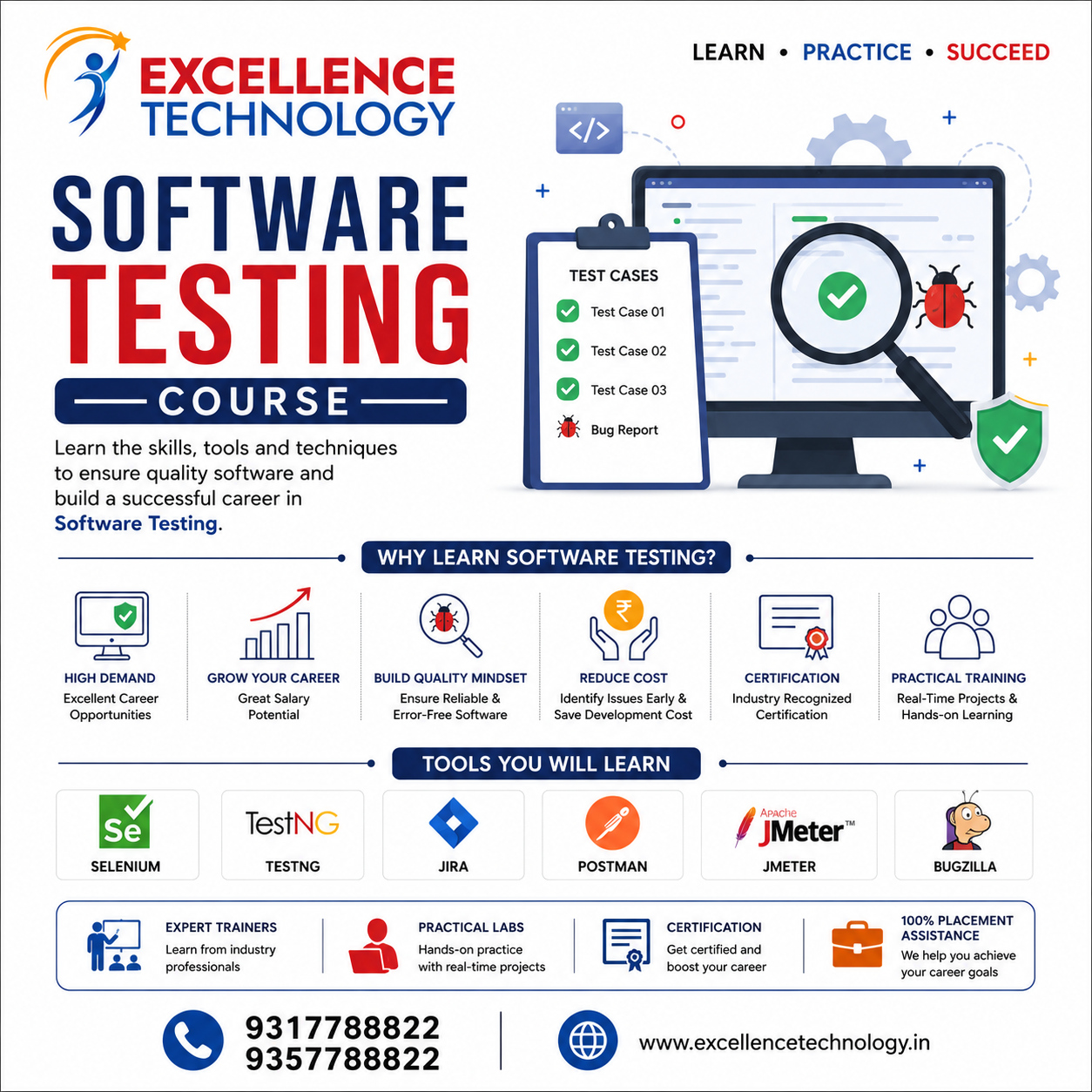
Every mobile application and website must work perfectly before reaching users. A single system bug can cost companies millions of dollars. Because of this risk, businesses hire skilled quality analysts constantly.
Enrolling in a software testing course is an excellent path into the IT sector. This comprehensive guide will explain everything about learning this highly essential tech skill.
What is a Software Testing Course?
A software testing course teaches you how to evaluate digital products systematically. You learn to find hidden bugs, errors, and performance defects. This training ensures that applications meet all customer expectations perfectly.
You do not need an advanced engineering degree to begin. A good software testing course starts with fundamental concepts. You will quickly learn to think like an everyday end-user.
Core Pillars of Quality Assurance
-
Manual Testing: Checking software manually for defects without using automation tools.
-
Automation Testing: Writing special test scripts to check applications automatically.
-
Performance Testing: Analyzing how fast an application loads under heavy user traffic.
Why Should You Choose Software Testing?
The tech industry is expanding at a highly rapid pace globally. Every new application requires rigorous checking before its official market launch. Taking a structured course gives you great career advantages.
Low Entry Barrier
This field does not demand complex mathematical knowledge or intense coding skills. Beginners can master manual testing concepts quite easily within a few weeks. It remains the easiest gateway into software companies.
High Job Availability
Thousands of software companies launch new digital products every single day. Consequently, the demand for certified QA professionals remains incredibly stable. You will find numerous job openings in every major tech hub.
Global Career Growth
Quality assurance skills are identical across the entire world. A certificate from a recognized institute allows you to apply for international jobs. You can also work comfortably as a remote tester.
Key Skills Taught in a Software Testing Course
A complete training program combines basic theories with practical lab exercises. You must understand how to document system bugs clearly for developers. Here are the core skills you will master.
1. Understanding the Testing Lifecycle
You will learn the structured steps involved in checking software systematically. This process follows a very specific sequence.
-
Requirement Analysis: Understanding what the client wants the software to do.
-
Test Case Design: Writing detailed step-by-step instructions to check specific features.
-
Bug Reporting: Documenting discovered software errors using specialized tracking tools.
2. Mastering Automation Tools
Manual checking can become tedious for large, complex digital platforms. You will study how to automate repetitive tasks using code.
-
Selenium: The most popular open-source tool used for web application testing.
-
Appium: A specialized tool used for checking mobile applications on Android and iOS.
-
Java or Python: Basic programming languages used to write your automation scripts.
3. API and Database Testing
Modern applications rely heavily on backend data servers to function. You will learn to verify data transmission security accurately.
-
Postman: A popular tool used for checking Application Programming Interfaces (APIs).
-
SQL Queries: Basic database commands used to verify stored user information.
Types of Software Testing Courses Available
There are various learning formats available to suit your current budget. You can select a program based on your daily schedule. Explore the most common options below.
|
Course Type |
Duration |
Best For |
|
Short-Term Certificates |
2 to 3 Months |
Absolute beginners seeking quick entry |
|
Automation Bootcamps |
6 Months |
Testers wanting to learn coding tools |
|
Advanced QA Diplomas |
1 Year |
Individuals wanting deep structural knowledge |
Online Training Bootcamps
Online courses offer unmatched flexibility for working corporate professionals. You can learn complex automation testing from your home. Most online platforms provide recorded video sessions and downloadable notes.
Classroom Training Centers
Physical institutes provide highly valuable face-to-face learning interactions. You can solve complex doubts instantly with your lab instructor. Working in groups also helps you build great communication skills.
Job Roles After Completing the Course
Finishing your software testing course opens up many unique career paths. The tech industry offers distinct designations based on your expertise level.
QA Manual Tester
Manual testers execute test cases manually without writing code scripts. They focus heavily on user experience, design layouts, and text alignment. This role is ideal for absolute tech beginners.
Automation Test Engineer
Automation engineers design and maintain automated script repositories for companies. They possess strong coding skills in Java, Python, or C#. This position commands much higher salary packages in IT.
Mobile Application Tester
These specialists focus entirely on checking smartphone applications across various devices. They analyze battery consumption, screen rotation habits, and network interruption behaviors. Mobile usage is booming, making this role highly critical.
How to Select the Best Software Testing Course
Choosing the wrong training program wastes your effort and hard-earned money. You must check institute details thoroughly before paying registration fees. Use this simple checklist to find your ideal course.
Insist on Live Projects
Theory books cannot teach you how real software breaks down. Ensure your course includes testing real, buggy web applications. Practical experience is what interviewers value most during selection.
Verify Automation Coverage
Manual testing jobs are facing tough competition in the modern market. Ensure your syllabus includes Selenium or API testing tools. Learning automation makes your tech resume stand out immediately.
Check Placement Assistance
A good institute helps students prepare for real corporate job interviews. Look for courses that offer mock interviews and resume building. Direct campus placement drives are a massive added advantage.
Useful Tips to Become a Great Software Tester
Enrolling in a structured course is just your first step. True excellence requires a unique mindset and constant attention to detail. Follow these practical tips to excel rapidly.
-
Be Curious: Always ask yourself what happens if a user clicks incorrectly.
-
Improve Writing: Learn to write clear, easy-to-understand bug reports for developers.
-
Learn Agile Basics: Study how modern tech teams collaborate using scrum frameworks.
-
Get Certified: Prepare for the ISTQB certification to gain global professional recognition.
Conclusion: Start Your Tech Career Today
A software testing course is a reliable bridge to a corporate IT job. You will gain skills that protect digital businesses from catastrophic failures. Every software development team globally needs a sharp tester to succeed.
Do not wait for a perfect opportunity to upgrade your skills. Explore industry-approved software testing courses today and secure a bright professional future.
Here are 10 short, frequently asked questions and answers about a software testing course:
Q1: What is a software testing course?
A: It is a training program that teaches you how to systematically check software applications to find and fix bugs before release.
Q2: Can non-technical students join this course?
A: Yes. Manual testing does not require coding, making it a perfect entry point for students from non-technical backgrounds.
Q3: What is the difference between manual and automation testing?
A: Manual testing involves checking software by hand as an end-user. Automation testing uses code and tools to run tests automatically.
Q4: Which automation tools are most popular in the industry?
A: Selenium, Appium, Postman, Cucumber, and JIRA are the most widely used software testing tools today.
Q5: Do I need to learn a programming language for automation?
A: Yes. To write automation scripts, you will usually need to learn the basics of a language like Java, Python, or C#.
Q6: How long does a standard software testing course take?
A: Short-term certificate courses take 2 to 3 months, while intensive automation bootcamps usually last up to 6 months.
Q7: What is ISTQB certification?
A: It is a globally recognized credential for software testers. Many companies prefer hiring candidates who have cleared this exam.
Q8: What career roles can I apply for after completing the course?
A: You can work as a QA Manual Tester, Automation Test Engineer, Mobile App Tester, or Performance Analyst.
Q9: Is software testing a stable career choice?
A: Yes. As long as developers create new apps and software, companies will always need testers to ensure high quality.
Q10: Does this course include live project practice?
A: Yes. Reputable institutes provide real, buggy web applications so you can gain practical experience tracking and reporting bugs.

 Arabic
 French
 Spanish
 Portuguese
 Deutsch
 Turkish
 Dutch
Dutch
 Italiano
 Russian
 Romaian
 Portuguese (Brazil)
 Greek
Greek