
EU Waste-to-Energy Market: Key Drivers, Challenges, and Opportunities
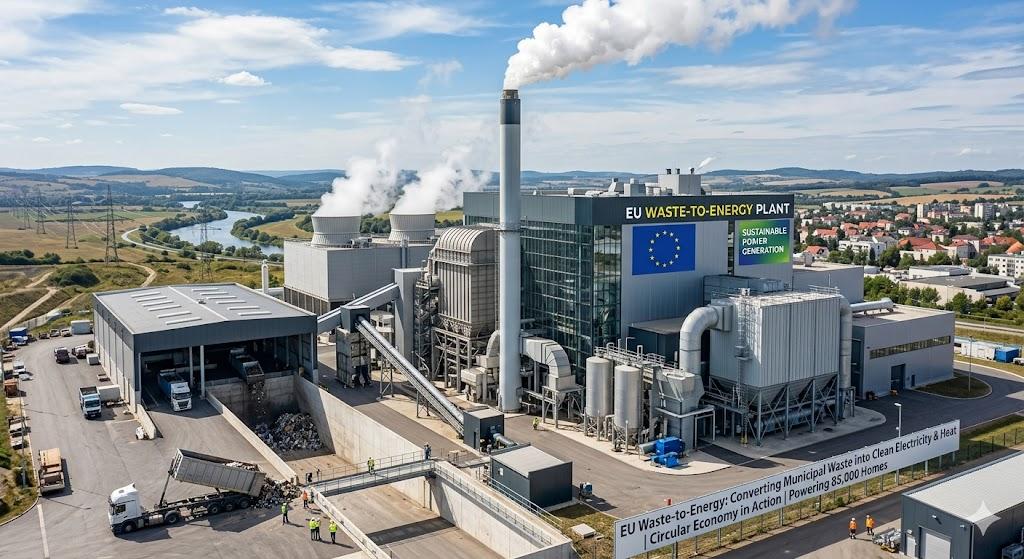
The EU Waste-to-Energy Market has witnessed substantial expansion over the past decade, driven by the region’s commitment to sustainable waste management and renewable energy generation. As landfill restrictions tighten and environmental awareness grows, waste-to-energy technologies are becoming an integral part of Europe’s energy ecosystem.
The scale of the market is influenced by several factors, including population density, industrial activity, and national waste management policies. Western European countries such as Germany, France, and the Netherlands dominate in terms of installed capacity, owing to early adoption and continuous investment in infrastructure. These countries have developed sophisticated systems that efficiently convert waste into electricity and heat.
In contrast, Eastern European nations are still in the process of scaling up their waste-to-energy capabilities. However, they are expected to contribute significantly to the overall market expansion in the coming years. EU funding programs and policy support are facilitating the development of new facilities in these regions, helping bridge the gap in infrastructure.
A detailed EU Waste-to-Energy Market Size evaluation highlights the growing capacity of WtE plants across the region. The increasing number of projects under development indicates strong future growth potential. These facilities not only address waste management challenges but also contribute to energy security by providing a stable source of power.
Technological advancements are playing a crucial role in shaping the market size. Modern plants are designed to maximize energy recovery while minimizing environmental impact. Innovations in sorting, processing, and emissions control are improving overall efficiency and enabling the handling of diverse waste streams. This enhances the scalability of waste-to-energy solutions.
Economic factors also influence market expansion. Rising energy prices and the need for diversified energy sources are encouraging investments in WtE projects. Additionally, the recovery of valuable materials from waste streams adds an extra revenue stream, improving project viability. Public-private partnerships are becoming increasingly common, providing the necessary financial support for large-scale developments.
However, challenges remain in achieving optimal market size. Regulatory complexities, high capital requirements, and public perception issues can slow down project implementation. Addressing these challenges requires coordinated efforts from governments, industry stakeholders, and local communities.
Overall, the EU Waste-to-Energy Market continues to grow in scale, reflecting the region’s commitment to sustainability and resource efficiency. As new projects come online and existing facilities are upgraded, the market is expected to expand further, playing a crucial role in Europe’s energy transition.

 English
 Arabic
 French
 Spanish
 Portuguese
 Deutsch
 Turkish
 Dutch
Dutch
 Italiano
 Russian
 Portuguese (Brazil)
 Greek
Greek