
Revealed: IoT Enabled Smart AC Systems Drive the Future of Energy Efficiency
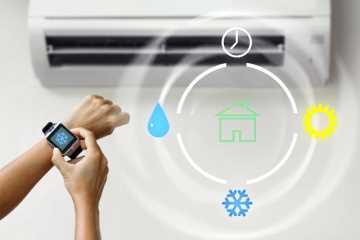
The emergence of IoT enabled smart AC systems is reshaping traditional air conditioning paradigms, presenting a critical evolution in energy management. This technology is anticipated to significantly impact the Smart Air Conditioning Market, which is projected to expand at a remarkable CAGR of 13.2%, reaching USD 75.37 billion by 2035. As consumers increasingly prioritize energy efficiency, the demand for connected air conditioning units is skyrocketing, showcasing a clear shift towards solutions that not only cool but also save on energy costs. The innovation inherent in intelligent climate control systems underscores the importance of smart HVAC solutions that align with contemporary environmental priorities.
Prominent market participants including Daikin (JP), Carrier (US), Trane (US), Mitsubishi Electric (JP), LG Electronics (KR), Samsung Electronics (KR), Honeywell (US), Panasonic (JP), Gree Electric Appliances (CN), and Toshiba (JP) are pivotal in driving advancements in IoT enabled air conditioners. These industry players are continually innovating to deliver energy efficient cooling solutions that meet the evolving needs of consumers and businesses alike. The current landscape is characterized by a strong emphasis on leveraging technology to develop connected AC devices capable of responding to user preferences and environmental conditions seamlessly.
Several factors are propelling the adoption of IoT enabled smart AC systems. First, the demand for energy efficient smart HVAC solutions is a dominant driver, as consumers become more conscious of their environmental footprint. Second, advancements in IoT connectivity allow for enhanced features such as remote monitoring and control via smartphones, making these systems highly appealing to tech-savvy users. However, challenges exist, notably the initial investment required for the adoption of such technologies. Additionally, concerns about data security and privacy may hinder some consumers from fully embracing IoT capabilities. Nevertheless, the benefits of operational savings and environmental sustainability far outweigh these challenges.
Regionally, North America continues to lead the Smart Air Conditioning Market, largely due to the established infrastructure supporting energy efficient smart HVAC solutions. The integration of innovative technologies is gaining traction, especially among consumers looking for intelligent climate control systems that enhance convenience and reduce energy bills. In contrast, the Asia-Pacific region is rapidly emerging as a vital market driven by urban expansion and increasing awareness regarding energy conservation. Nations like China and India are experiencing an upsurge in demand for connected air conditioning units as more households seek sustainable solutions.
The Smart Air Conditioning Market presents myriad growth opportunities for stakeholders. The increasing consumer demand for IoT enabled smart AC systems directly correlates with the rise of smart home technologies, where energy efficient smart HVAC solutions are key components. Companies are also exploring collaborations with tech firms to integrate AI capabilities into their products, thus enhancing performance and user experience. According to Market Research Future, investments in research and development are likely to accelerate, leading to innovative products that will redefine market standards.
In 2022, the global market for smart air conditioning systems was valued at approximately USD 30 billion, with North America accounting for nearly 40% of this figure. This dominance can be attributed to the region's strong regulatory framework promoting energy efficiency, as well as a high penetration rate of smart home technology. For instance, the U.S. Department of Energy has introduced various incentives for homeowners who adopt energy-efficient appliances, including smart AC systems, resulting in a projected 25% reduction in energy consumption by 2030. Conversely, the Asia-Pacific market is expected to grow by over 20% annually, driven by increasing urbanization and a growing middle-class population.
As the market progresses towards 2035, the role of IoT enabled smart AC systems is expected to expand significantly. The advent of new technologies will likely enhance system capabilities, enabling predictive analytics and automated climate adjustments based on external conditions. Such advancements will cater to a rising consumer base that values energy saving and sustainability. Companies that prioritize innovation and consumer-centric design will be best positioned to thrive in this evolving market landscape, setting new benchmarks for energy efficiency.
AI Impact Analysis
Artificial intelligence is set to be a transformative force within the Smart Air Conditioning Market. The integration of AI technologies into IoT enabled smart AC systems allows for the development of intuitive features that adapt to user behavior. For instance, AI can optimize energy consumption patterns based on historical usage data, resulting in significant cost savings and improved efficiency. This advanced capability positions these smart HVAC solutions as not just appliances, but as integral components of energy management strategies for homes and businesses alike.

 Arabic
 French
 Spanish
 Portuguese
 Deutsch
 Turkish
 Dutch
Dutch
 Italiano
 Russian
 Romaian
 Portuguese (Brazil)
 Greek
Greek