
Data Center Ups Market Size: Quantifying the Power Protection Opportunity
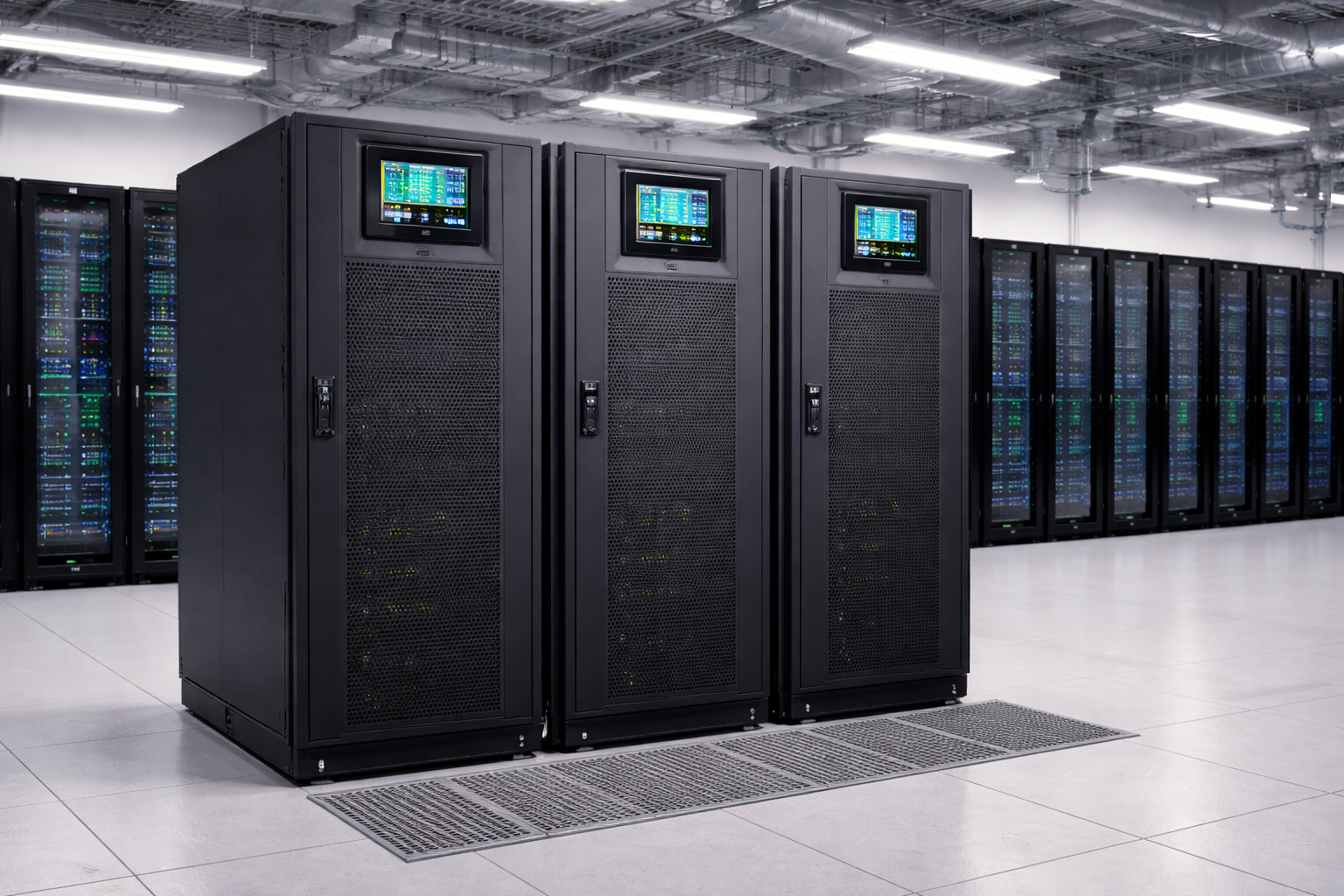
Quantifying the Data Center Ups Market Size requires analyzing multiple dimensions: revenue, installed megawatts, and unit shipments. According to authoritative data from Data Center Ups Market Size, the global market was valued at approximately $9.5 billion in 2023 and is projected to reach $15.8 billion by 2030. However, these headline numbers mask important nuances. The market size for uninterruptible power supply systems in hyperscale data centers (above 1MW) is growing at 12% annually, while the sub-100kVA segment for enterprise server rooms is growing at only 4%. Lithium-ion UPS now accounts for over 25% of market size, up from just 5% in 2018, and this share is expected to exceed 50% by 2028.
Market Overview and Introduction
Understanding the Data Center Ups Market Size demands a segmented approach. By kVA rating, the 500kVA to 2MW segment holds the largest share (approximately 40%), serving colocation and enterprise data centers. By topology, double-conversion online UPS dominates with over 80% share due to its superior power conditioning. By battery type, VRLA still leads in installed base, but lithium-ion leads in new deployments. Geographically, North America accounts for 35% of market size, followed by Asia-Pacific at 30% and Europe at 25%. The remaining 10% is shared by Middle East, Africa, and Latin America. Importantly, the market size for backup power solutions includes not just the UPS hardware but also batteries, software, installation, and maintenance contracts, with services representing about 20% of total revenue.
Key Growth Drivers
Several factors expand the Data Center Ups Market Size. First, the average power density per server rack has increased from 5kW to 15kW over five years, requiring larger UPS capacity per square foot. Second, the proliferation of edge data centers—projected to reach over 500,000 sites globally by 2027—each requiring a small UPS, adds up to significant cumulative market size. Third, regulatory changes in Europe now require UPS efficiency labeling, pushing replacement of older inefficient units. Fourth, the increasing cost of downtime (averaging $9,000 per minute for large enterprises) makes UPS investment justifiable. Additionally, the trend toward prefabricated modular data centers includes integrated UPS, shifting market size from components to systems.
Consumer Behavior and E-commerce Influence
E-commerce influences Data Center Ups Market Size through the growth of cloud providers that support online retail. AWS, Azure, and Google Cloud—the backbones of e-commerce—operate hundreds of data centers, each requiring multiple redundant UPS modules. A single hyperscale data center can contain 50 to 100 UPS units of 1MW each, representing $10-20 million in UPS market size. Furthermore, e-commerce seasonality (Black Friday, Singles’ Day) drives data center operators to add temporary UPS capacity during peak months, creating a rental market. Small e-commerce businesses hosting their own servers often purchase refurbished UPS units, contributing to secondary market size. The shift to cloud-native e-commerce means that even tiny online stores indirectly contribute to UPS market size via their cloud provider’s infrastructure investments.
Regional Insights and Preferences
The Data Center Ups Market Size varies dramatically by region due to different data center construction rates. Northern Virginia (US) alone accounts for nearly 10% of global market size, given its concentration of hyperscale data centers. In Europe, the Frankfurt-London-Amsterdam-Paris (FLAP) corridor represents over half the continent’s market size. China’s market size is growing rapidly but remains dominated by domestic UPS manufacturers, with foreign brands holding less than 30% share. India’s market size is expanding as global cloud providers open regions in Mumbai, Hyderabad, and Chennai. Preferences: Japanese data centers prioritize UPS with seismic certification; Australian operators prefer high-temperature-tolerant batteries due to hot climates; Middle Eastern operators favor UPS with dust filtration for desert environments.
Technological Innovations and Emerging Trends
Technology directly influences Data Center Ups Market Size by enabling new applications. The development of ultra-compact UPS (as small as 1U rack height) has created a market for in-rack UPS that protect individual servers, expanding the addressable market to include every server cabinet. Silicon carbide (SiC) semiconductors allow UPS to operate at higher switching frequencies, reducing the size of magnetic components and enabling higher power density. Cloud-based UPS management software has created a recurring revenue stream, increasing the total addressable market beyond one-time hardware sales. The integration of UPS with building energy management systems allows data centers to optimize total power usage, making UPS a value-added system rather than a cost center. Additionally, the emergence of “UPS with integrated switchgear” reduces installation costs, making UPS feasible for smaller data centers that previously relied on less reliable protection.
Sustainability and Eco-friendly Practices
Sustainability considerations are reshaping the Data Center Ups Market Size by creating new product categories. “Green UPS” with efficiencies above 98% command premium pricing, increasing market size in high-efficiency segments. The market for refurbished and second-life UPS has grown into a $500 million segment as sustainability-focused operators choose reused equipment. Battery recycling services have become a significant revenue line, with some UPS manufacturers offering take-back programs. The trend toward “UPS-free” data centers that use software redundancy and distributed power has not reduced market size but shifted it toward more sophisticated, higher-value UPS that offer grid services. Additionally, carbon credits for using UPS in grid stabilization create an indirect financial incentive for UPS investment, potentially increasing market size.
Challenges, Competition, and Risks
Measuring and forecasting Data Center Ups Market Size faces challenges. Double-counting occurs when UPS are sold as part of integrated data center modules but also counted separately. Currency fluctuations distort reported revenues, as the market is global but reported in dollars. The shadow market of uncertified UPS (especially in Asia) may add an estimated 10-15% unreported size. Competition is intense, with legacy players (Schneider, Eaton, Vertiv) competing with low-cost Chinese manufacturers (Huawei, Delta) that are gaining share in price-sensitive segments. Risks include overcapacity in UPS manufacturing, leading to price wars that reduce market size in dollar terms even as unit shipments grow. Additionally, the trend toward higher voltage DC distribution (380V DC) in some data centers could reduce the need for traditional AC UPS.
Future Outlook and Investment Opportunities
The Data Center Ups Market Size will likely exceed $20 billion by 2035, driven by AI data centers (which require higher power densities) and the continued buildout of edge infrastructure. Investment opportunities include lithium-ion UPS manufacturers with strong patent portfolios, software companies providing UPS analytics and predictive maintenance, and battery recycling firms. Geographically, the fastest growth in market size will occur in Southeast Asia, India, and the Middle East. For private equity, acquiring regional UPS distributors and transforming them into full-service power protection providers is attractive. The market for UPS-as-a-Service (subscription models) is expected to grow from negligible to over $1 billion by 2030, creating new investment vehicles. As data center power demands continue to rise, the Data Center Ups Market Size will remain on a strong upward trajectory.
Conclusion
The Data Center Ups Market Size reflects the critical importance of power continuity in an increasingly digital world. From small edge units to massive hyperscale installations, UPS systems are essential infrastructure. Understanding the nuances—by segment, by region, by battery chemistry—is essential for stakeholders. As sustainability and AI reshape the industry, the market size will continue to expand, with lithium-ion and software-driven solutions leading the way.
➤➤Explore Market Research Future- Related Ongoing Coverage In Semiconductor Industry:
Portable Device Charging Kiosk Market

 English
 Arabic
 French
 Spanish
 Portuguese
 Deutsch
 Turkish
 Dutch
Dutch
 Russian
 Romaian
 Portuguese (Brazil)
 Greek
Greek